There's
a reason this wasn't published in Russia until 1987, and it had nothing
to do with the quality of this novel. Written during the height of the
NEP period, it's a transparent satire of the life of both the arrivistes
and the old money.
At first I thought this was going
to be a work along the lines of Jack London, as it opens with the dog as
the narrator. But it quickly moves to a third person perspective
(although the changes in intelligence the dog undergoes would make for a
challenging first "person" perspective).
The conceit
of the story is that by transplanting certain parts (such as the
pituitary gland) from a (recently deceased) human into an animal, the
animal could gain human form and intelligence. Of course, the
newly-human dog behaves exactly the way one would expect (crudely), and
sides with his benefactors enemies.
It's an easy read, would recommend.
Showing posts with label satire. Show all posts
Monday, December 7, 2015
Tuesday, February 26, 2013
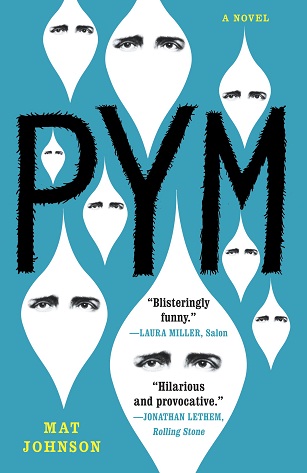
Pym
Mat Johnson's Pym is many things; sure, it's a satirical novel on race in America, both our obsession with it and how it drives American society, but it's also a fun fantasy novel that can be read entirely without context (here, I'm thinking of a sheltered twelve year old, hundreds of years from now, because it's tough of me to conceive of someone reading this and missing the overtones and allusions)
Pym opens with the protagonist, Chris Jaynes, having just been denied tenure at a historically white college in upstate NY (here, I picture something like Bard, or New Paltz) because despite being the sole black male professor, he doesn't behave as he is expected to. That is, he doesn't join the school's diversity committee, and he'd rather teach the whole canon of American literature, rather than just African-American literature.
Immediately after his firing, Jaynes is thrown a bone -- a slave narrative that confirms the truth of Edgar Allen Poe's only novel, The Narrative of Arthur Gordon Pym. Purportedly written by Pym's companion on his voyage, Dirk Peters (the man selling the manuscript interjects, "Who ever heard of a black man named 'Dirk'?", which is a question that could be raised about Jaynes' childhood friend, Garth) the manuscript offers insight into both the mysterious ending of Poe's novel, as well as events leading up to it. Jaynes immediately attempts to venture to Antarctica to confirm, enlisting the help of a his cousin (a marine entrepreneur), and an ex-girlfriend (a lawyer).
When the makeshift crew Jaynes hastily assembles arrives in Antarctica, Pym really hits its stride. With the progression of the plot, the racial satire is ratcheted up, and the parallels with Poe's novel shine through. Pym's progression even includes a similar ambiguous ending.
My edition concludes with sixteen discussion questions, which I'm not going to get into here. I would recommend this novel, even if you haven't read Poe's. While I did, and I thought my experience was enhanced because of this, it isn't strictly necessary.
Pym opens with the protagonist, Chris Jaynes, having just been denied tenure at a historically white college in upstate NY (here, I picture something like Bard, or New Paltz) because despite being the sole black male professor, he doesn't behave as he is expected to. That is, he doesn't join the school's diversity committee, and he'd rather teach the whole canon of American literature, rather than just African-American literature.
Immediately after his firing, Jaynes is thrown a bone -- a slave narrative that confirms the truth of Edgar Allen Poe's only novel, The Narrative of Arthur Gordon Pym. Purportedly written by Pym's companion on his voyage, Dirk Peters (the man selling the manuscript interjects, "Who ever heard of a black man named 'Dirk'?", which is a question that could be raised about Jaynes' childhood friend, Garth) the manuscript offers insight into both the mysterious ending of Poe's novel, as well as events leading up to it. Jaynes immediately attempts to venture to Antarctica to confirm, enlisting the help of a his cousin (a marine entrepreneur), and an ex-girlfriend (a lawyer).
When the makeshift crew Jaynes hastily assembles arrives in Antarctica, Pym really hits its stride. With the progression of the plot, the racial satire is ratcheted up, and the parallels with Poe's novel shine through. Pym's progression even includes a similar ambiguous ending.
My edition concludes with sixteen discussion questions, which I'm not going to get into here. I would recommend this novel, even if you haven't read Poe's. While I did, and I thought my experience was enhanced because of this, it isn't strictly necessary.
Labels:
academics,
Antarctica,
Arthur Gordon Pym,
blubber,
Edgar Allen Poe,
ice,
Lil' Debbie,
Mat Johnson,
painting,
race,
racism,
satire,
Tekeli-li,
Tsalal
Subscribe to:
Posts (Atom)